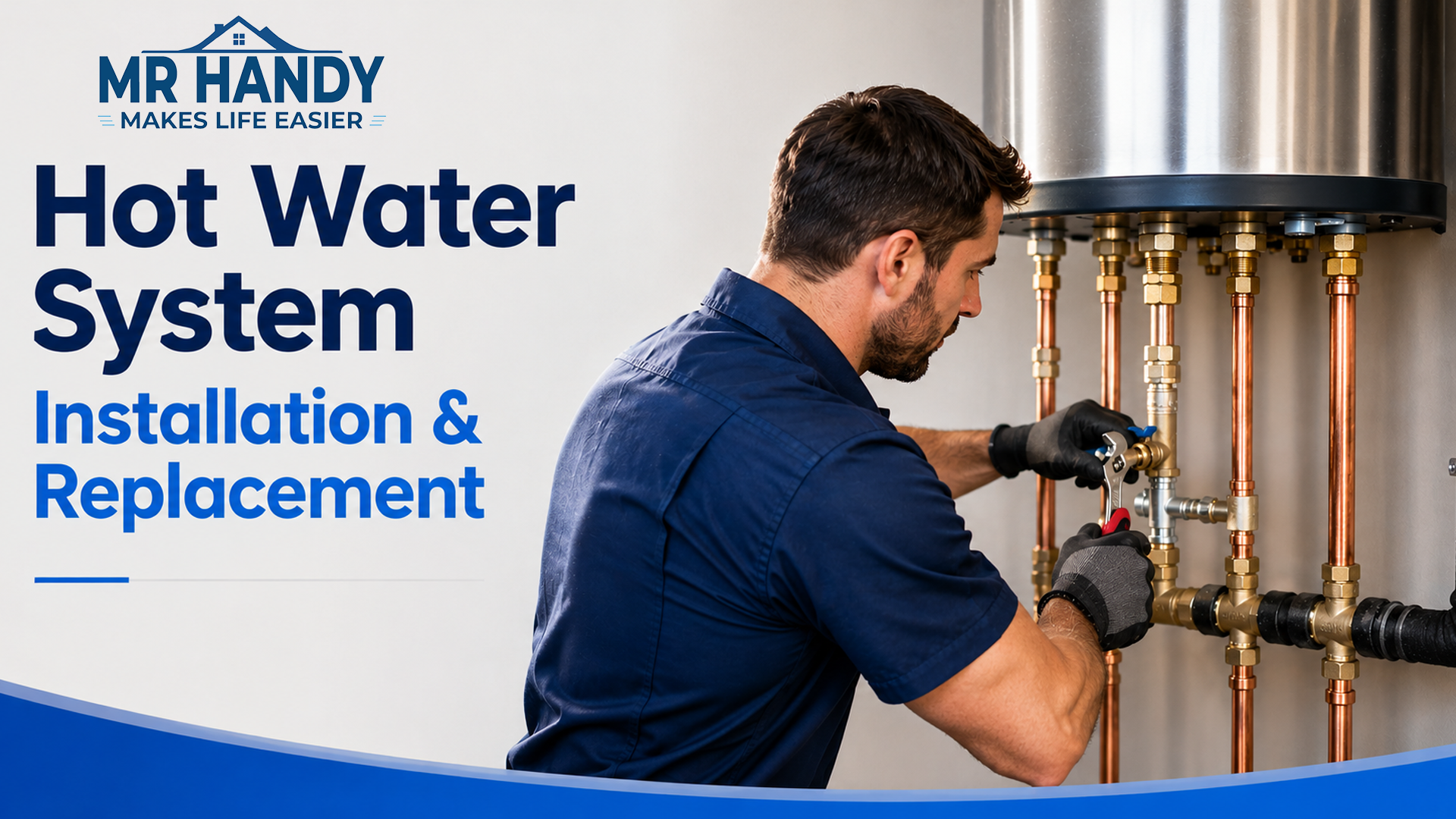
Hot Water System Installation & Replacement
July 22, 2026 by Mr Handy Team
Gas, electric, solar or heat pump same-day emergency fix or full replacement. Here's what a hot water system installation actually involves in Australia, what it costs, and how to find a licensed plumber who won't leave you with cold showers. Find a Licensed Hot Water Plumber near you.
If your hot water system has stopped working, is leaking, or is simply old enough that you're bracing for it to fail, you're weighing up two decisions at once: which type of hot water system to install, and which licensed installer to trust with the job. Both matter. A new unit fitted incorrectly will cost you more in the long run than an older one that was installed properly. This guide covers the full picture system types, installation steps, realistic pricing, and what separates a reputable installer from a risky one.
Most Australian homes replace a hot water system every 8–12 years. A standard electric storage replacement typically runs $1,200–$2,500 installed, gas storage $1,500–$3,200, heat pump $2,800–$5,500, and solar hot water $4,000–$9,500 depending on rebates, roof access and existing infrastructure. Emergency same-day replacement usually carries a call-out premium on top of standard pricing.
Types of Hot Water Systems Available in Australia
Choosing between an electric, gas, solar or heat pump hot water system comes down to your household size, energy access, climate, and how much you're willing to spend upfront versus over time. Each type suits different homes.
Electric Hot Water System
Lowest upfront cost and simplest installation. Runs on off-peak or continuous electricity tariffs. Best for homes without gas connection or where budget is the main driver
Gas Hot Water System
Faster recovery than electric and cheaper to run where natural gas is connected. Available as storage tanks or continuous flow (instantaneous) units that heat water on demand
Solar Hot Water System
Roof-mounted collectors heat water using the sun, with a gas or electric booster for overcast days. Higher installation cost but the lowest running cost long-term, and eligible for government rebates in most states
Heat Pump Hot Water System
Extracts heat from surrounding air to warm water, using roughly a third of the electricity of a standard electric unit. Strong middle ground between solar and conventional electric, and increasingly the default replacement recommendation
Storage Hot Water Systems
Heat and hold a tank of water (typically 125–400L) ready for use. Simple, reliable, and available in every fuel type above.
Instantaneous Hot Water Systems
Heat water only as it's needed rather than storing it, so you never run out popular for larger households and commercial kitchens, and typically gas-powered.
Hot Water System Installation: What Actually Happens
A proper hot water system installation is more than swapping the old unit for a new one. A licensed plumber (and for gas systems, a licensed gas fitter) will typically work through the following:
1. Assessment and Sizing
Confirming the right tank size or flow rate for your household, and whether your existing pipework, gas line or electrical circuit can support the new unit.
2. Removal of the Old System
Safely disconnecting and removing the existing hot water unit, including safe disposal.
3. Positioning and Mounting
Installing the new unit on an appropriate base or wall bracket, meeting clearance and ventilation requirements.
4. Connections
Plumbing the water inlet/outlet, connecting gas or electrical supply, and fitting a temperature-pressure relief (TPR) valve.
5. Compliance Checks
Testing for leaks, confirming correct temperature output (max 50°C at the tap in most states for scald safety), and, for gas or solar installs, arranging any required council or energy provider sign-off.
6. Handover
A working demonstration and warranty documentation for the new hot water system and installation.
Hot Water System Prices: What Installation Actually Costs
Hot water system installation cost depends on the type of unit, tank size, whether you're doing a like-for-like replacement or a fuel-type conversion (e.g. electric to gas), and access to the existing site. The table below reflects typical supply-and-install pricing seen across Australian residential jobs for a broader breakdown of hourly rates and call-out fees, see our guide to plumber costs in Australia.
Typical hot water system prices (supply and installation, AUD)
| System Type | Typical Installed Cost | Notes |
|---|---|---|
| Electric Storage | $1,200 – $2,500 | Cheapest installation, higher running costs. |
| Gas Storage | $1,500 – $3,200 | Requires existing or new gas connection. |
| Gas Instantaneous | $1,800 – $3,500 | Continuous hot water, compact footprint. |
| Heat Pump | $2,800 – $5,500 | Lower running cost; may qualify for STC rebates. |
| Solar (with Booster) | $4,000 – $9,500 | Roof access and orientation affect cost; rebate-eligible. |
Residential vs Commercial Hot Water Installation
Residential Installation
Residential installs are usually a single-unit replacement or upgrade sized to household demand.
Commercial Installation
Commercial hot water installation for cafes, gyms, aged care, hospitality or multi-unit residential buildings involves higher-capacity systems, trade waste and backflow compliance, and often staged installation to avoid disrupting business operations. A commercial job should always be scoped and quoted separately from a standard residential replacement browse all trade and business service categories to find the right fit for the job
Repair, Replacement, or Emergency Same-Day Service?
Not every hot water problem means a full system replacement. Here's how to tell which category your situation falls into.
Hot Water System for Camping and Off-Grid Use
How to Choose the Right Hot Water System Installer
The installer matters as much as the unit itself. Before booking a hot water plumber, check for:
-
Licensing
A current plumbing licence, and a separate gas fitting licence for any gas hot water system work. -
Insurance
Public liability cover, and workmanship warranty on the installation itself, separate from the manufacturer's product warranty. -
Transparent Quoting
A fixed quote covering supply, installation, removal of the old unit, and any compliance certificates, with no vague "labour on top" pricing. -
Local Availability
Particularly important for emergency or same-day replacement, where a nearby installer can respond faster. -
Reviews from real jobs
Recent, verifiable feedback on installation quality, not just star ratings.
Why Choose Mr Handy?
Mr Handy connects Australian homeowners and businesses with licensed, insured tradespeople across 25+ cities. Pricing shown is general guidance only request a fixed quote before booking any work. Read more about Mr Handy or get in touch.
Frequently Asked Questions
Can't find your question below? Visit our full FAQ page for more on how Mr Handy works.
Compare Quotes From Licensed Hot Water Plumbers
Tell Mr Handy what you need—repair, replacement, or a full new installation—and get connected with licensed, insured plumbers in your area.
Find a Plumber Near YouHot Water System Installation & Replacement
- ✓ Types of Hot Water Systems Available in Australia
- ✓ Hot Water System Installation: What Actually Happens
- ✓ Hot Water System Prices: What Installation Actually Costs
- ✓ Residential vs Commercial Hot Water Installation
- ✓ Repair, Replacement, or Emergency Same-Day Service?
- ✓ Hot Water System for Camping and Off-Grid Use
- ✓ How to Choose the Right Hot Water System Installer
- ✓ Frequently Asked Questions